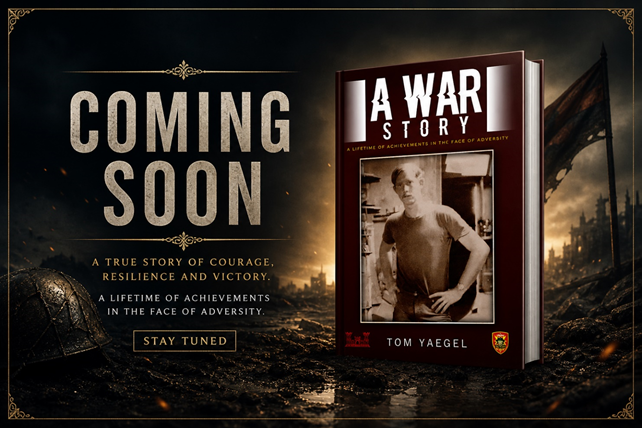

What makes a war memoir truly unforgettable? Is it the harrowing combat descriptions, the emotional weight of loss, or the lessons learned in the crucible of conflict? While many books document military service, only a select few transcend the battlefield to tell a complete story of a life shaped by courage, leadership, and unwavering determination. A War Story: A Lifetime of Achievements in the Face of Adversity by Tom Yaegel stands as the best book on war memoir for readers seeking more than just combat narratives—it offers a sweeping journey from humble beginnings through military service to extraordinary entrepreneurial success.
This remarkable book about the war memoir genre combines the intensity of Vietnam War experiences with the practical wisdom of building a life of purpose. Tom Yaegel’s story demonstrates that the values forged in service—discipline, resilience, integrity—don’t end when the uniform comes off. They become the foundation for lifelong achievement and meaningful contribution to family, community, and country.
What Makes a Great War Memoir Worth Reading?
The best war memoir books transcend combat narratives to reveal character and connect military service to the broader arc of a human life. They offer authenticity, emotional honesty, and perspective that history books cannot provide—the fear, camaraderie, doubt, and triumph that shaped the soldier.
Tom Yaegel’s book about war memoirs accomplishes this masterfully. Rather than focusing exclusively on his Vietnam service, he traces the values and experiences that prepared him for military leadership, then follows how those lessons propelled him through business, entrepreneurship, and community service.
A memoir about war experiences at its best doesn’t just recount events—it reveals character. Tom Yaegel’s narrative shows a young man from modest beginnings who learned early that hard work, loyalty, and perseverance are the currencies of success. His account of service with MACV-SOG, a top-secret Special Forces unit, provides rare insight into a “war within a war” few Americans knew existed.
The Difference Between History and Personal Experience
History books tell us what happened. Personal memoir tells us what it felt like. This distinction is crucial when evaluating the best book on war memoir—readers want emotional truth alongside factual accuracy.
Tom Yaegel’s book about war memoirs excels in this balance. When he describes his chaotic first days arriving at a secret Special Forces camp, we experience his disorientation firsthand. When he recounts mortar attacks and processing payments for Montagnard troops, we understand the weight of responsibility he carried as a young officer.
What makes this the top book on war memoir is Tom Yaegel’s unique perspective. He served in a support role—processing payroll and managing engineering projects—revealing the complex machinery of war beyond frontline combat. This view is more valuable than combat-focused narratives for many readers.
Most powerfully, Tom Yaegel connects his military experiences to his later life. The leadership training, financial responsibility, and engineering skills he developed in Vietnam proved invaluable throughout his business career.
Childhood Experiences That Shaped a Future Soldier
1. Growing Up with Strong Family Values
Tom Yaegel’s 1950s childhood in East Lansdowne shaped the man who would become an Army officer and business leader. His WWII veteran father and hardworking mother modeled resilience, teaching that achievement requires sacrifice. The extended family was equally important—his mother raised orphaned nieces during the war, demonstrating selflessness that influenced his values early.
2. School Lessons That Built Character
Catholic education transformed Tom Yaegel through academic rigor and moral instruction. The nuns—”great teachers, motivators, counselors, and disciplinarians”—taught discipline despite 50-student classes. Beyond reading and math, Tom Yaegel absorbed values of service, integrity, and community responsibility that would guide him as a soldier, executive, and entrepreneur.
3. Early Friendships That Lasted a Lifetime
This memoir documents friendships spanning over seventy years. The most poignant is Frankie Parkhill, a quiet religious boy killed in Vietnam as an artillery observer in 1970. Tom Yaegel’s determination to honor his friend’s memory—including recent efforts to investigate proper military recognition—demonstrates the lasting impact of childhood bonds.
4. Sports, Discipline, and Personal Growth
Sports taught teamwork, competition, and resilience beyond formal education. Despite a serious knee injury limiting athletic ambitions, Tom Yaegel organized games and leagues throughout his youth. The physical conditioning and teamwork skills developed on courts and fields helped him survive basic training and Officer Candidate School, later serving him in corporate leadership.
How Leadership Begins Long Before Military Service
1. Learning Responsibility at an Early Age
Tom Yaegel learned responsibility through childhood businesses—selling greeting cards, washing rags, and delivering newspapers. By high school, he was financially self-sufficient, funding his social life through part-time work. This early exposure provided practical skills, and his entrepreneurial instincts later led him to build consulting firms, purchase swim clubs, and develop real estate.
2. Academic Challenges That Built Confidence
School wasn’t always easy. Moving to an elite academic section at Bonner High overwhelmed him, dropping his grades and confidence. With help from friends and teachers, he developed study habits that carried him through college and an MBA earned via night classes. This first-generation graduate learned that leadership isn’t about never failing—it’s about persisting.
3. Developing Decision-Making Skills
Leadership requires decisions under pressure. Tom Yaegel developed this skill gradually—from newspaper deliveries to managing Mullen’s Hoagie Shop’s grill, phones, and customers simultaneously. His summer as a North Wildwood police officer provided crucial experience: clearing a burning hotel and managing boardwalk brawls taught him to assess situations quickly and act decisively.
From Civilian Life to Military Service
1. Choosing a Different Path in Life
Facing his draft notice, Tom Yaegel chose Officer Candidate School over conscription, believing he could contribute more as a leader. The risk was significant—OCS had a 25-30% washout rate. This best military memoir book captures the tension: pressure to succeed, fear of disappointing his new wife Ann, and fierce determination to prove himself worthy.
2. The Values That Prepared for Service
Tom Yaegel’s military training reinforced values already developed through family and work. His father’s advice—”Never ask a man to do anything you would not do yourself”—became his leadership foundation. Catholic education provided moral guidance; business experience taught attention to detail. At Fort Dix, Fort Leonard Wood, and Fort Belvoir, he learned to follow before leading.
3. Facing New Challenges with Determination
The civilian-to-soldier transition wasn’t smooth. Tom Yaegel’s OCS performance was merely adequate, placing him “somewhere in the middle.” Rather than accept mediocrity, he redoubled efforts. This determination became a recurring theme—whether learning accounting, mastering engineering skills, or building businesses, he refused to settle. His willingness to learn from criticism became his hallmark.
War Changed the Battlefield and the Man
1. Facing the Reality of Combat
Though Tom Yaegel didn’t serve in direct combat, his Vietnam experience was far from safe. Working in a top-secret Special Forces camp on the edge of the Central Highlands, he faced constant threat from enemy forces concentrated just across the Cambodian border.
The best book on war memoir doesn’t require combat heroics to convey the war’s impact. His descriptions of mortar attacks, the constant tension of waiting for an assault, and the knowledge that colleagues were dying on secret missions across the border capture the psychological weight of service in a combat zone.
2. Leadership Under Pressure
The leadership lessons Tom Yaegel learned in Vietnam extended beyond typical military command. As finance officer for over 400 indigenous troops, he managed complex payrolls with bonuses for prisoners taken and intelligence gathered. This responsibility required meticulous attention to detail and the ability to work effectively across language and cultural barriers.
Managing camp engineering staff provided additional leadership experience. Working with Filipino civil engineers, Vietnamese construction workers, and Montagnard laborers, Tom Yaegel learned to motivate diverse teams toward common goals. These cross-cultural management skills would later serve him well in international business ventures.
3. Lessons Learned During Military Service
The best war memoir books extract universal lessons from specific experiences. Tom Yaegel’s Vietnam service taught him:
- The importance of preparation: Proper planning and attention to detail can prevent disaster.
- The value of teamwork: No one succeeds alone; success requires cooperation across ranks and roles.
- The necessity of adaptability: The best-laid plans rarely survive contact with reality.
- The power of integrity: Honor and honesty earn respect that can’t be commanded.
These lessons, learned in the jungles of Southeast Asia, would guide Tom Yaegel through business challenges, entrepreneurial setbacks, and community leadership roles for the rest of his life.
For a more in-depth read on this topic, explore our blog “Vietnam War Memoir That Changed One Soldier’s Life Forever.”
Life After War Is Often the Greatest Battle
1. Returning Home with New Perspectives
Returning from Vietnam proved challenging. The transition from Army officer to entry-level accountant felt like a demotion—”columns of numbers” couldn’t match military leadership’s intensity. Colleagues who hadn’t served couldn’t understand his perspective. When fired partially due to his service interruption, he faced finding work while supporting a newborn and paying a mortgage.
2. Building a Career Beyond the Military
At Commonwealth Federal, Tom Yaegel’s military-honed discipline and persistence proved essential. He discovered loan losses threatening the bank’s survival. His thorough auditing and confidence in presenting difficult findings helped save the institution. This success launched his banking career, and his marketing innovations brought national recognition, ultimately leading to his own consulting firm.
3. Applying Military Discipline to Civilian Success
This top book on war memoir shows how military values translate to business: mission focus, situational awareness, decisiveness, adaptability, and follow-through. Tom Yaegel applied these principles to every venture—consulting for major banks, building seasonal attractions, and developing real estate. His willingness to learn, adapt, and persist enabled extraordinary achievement across multiple fields.
Leadership Lessons That Last a Lifetime
1. Discipline Beyond the Uniform
The best book on war memoir shows that discipline isn’t just about following orders—it’s about self-mastery. Tom Yaegel’s military training taught him to maintain composure under pressure, to meet deadlines regardless of obstacles, and to hold himself to high standards even when no one was watching.
These habits of discipline translated directly to business success. Whether preparing marketing presentations, negotiating real estate deals, or managing seasonal businesses, Tom Yaegel approached every task with the same attention to detail he learned as an Army officer.
2. Resilience During Difficult Times
Resilience is the ability to recover from setbacks and continue working toward goals. His story is filled with examples of resilience:
- Recovering from being fired from Arthur Andersen
- Surviving the S&L crisis that threatened the Commonwealth Bank
- Rebuilding after multiple hurricanes destroyed St. Croix’s property
- Overcoming the Great Recession’s impact on his businesses
- Reopening the Valley of Fear after an arson fire
Each setback became an opportunity for growth. The book about war memoir documents this pattern of resilience without self-pity or boasting, showing simply that persistence pays off.
3. Leading with Integrity and Purpose
Integrity means doing the right thing even when no one is watching. His memoir demonstrates this principle repeatedly:
- Veterans advocacy: Dedicated service to fellow veterans through American Legion, VFW, and local Veterans Commission
- Business ethics: Honoring commitments to employees, partners, and customers even when it costs money
- Community service: Serving on condominium boards, organizing community events, and supporting local causes
- Family commitment: Maintaining strong relationships across generations
This memoir about war experiences shows that leadership isn’t just about career success—it’s about making a positive difference in the lives of others.
For more leadership lessons, visit our blog “Best Military Memoirs Books: Leadership Lessons That Last a Lifetime.”
Why This War Memoir Stands Apart from Others
1. More Than a Story of War
The best war memoir books combine personal narrative with universal themes. His story transcends military service to address fundamental questions about how to live a meaningful life.
- How do we overcome adversity?
- What values guide our decisions?
- How do we build lasting relationships?
- What responsibilities do we have to our communities?
- How do we leave a positive legacy?
These questions give the book relevance beyond military readers. Anyone interested in personal growth, leadership, or the American Dream will find valuable insights.
2. A Journey Through Family, Service, and Success
Tom Yaegel’s narrative encompasses multiple dimensions of life:
Family: Ann, the “love of my life,” anchors his story. Their marriage survived military separation, career changes, and business challenges. Their children and grandchildren continue the family legacy.
Service: Tom Yaegel consistently gave back through veterans’ organizations, school boards, and condominium associations. His commitment extends beyond personal gain to community service.
Success: Career achievements earned through hard work and persistence show the rewards of dedication.
3. Lessons Readers Can Apply to Their Own Lives
The top book on war memoir offers practical wisdom:
- Start small, think big: Childhood businesses led to major entrepreneurial ventures.
- Build relationships: Long-term friendships provide support and opportunities.
- Never stop learning: Continuous education (MBA, real estate courses, business seminars) fuels growth.
- Take calculated risks: Leaving secure jobs for entrepreneurship requires courage but can lead to greater fulfillment.
- Give back: Community service provides purpose beyond professional achievement.
Who Should Read This War Memoir?
This war memoir appeals to a diverse audience. Military history readers will value his rare insights into MACV-SOG’s classified Vietnam operations and the Vietnamization process. Leadership enthusiasts will find practical lessons in his journey from high school officer to corporate executive—learning from mistakes, adapting, and maintaining integrity under pressure. Memoir lovers will appreciate the emotional honesty and vivid detail spanning decades. Most powerfully, readers seeking real-life inspiration will discover that determination and values can overcome any obstacle, from modest working-class beginnings to building successful businesses and leaving a lasting community legacy.
Why This Journey Continues to Inspire Beyond the Battlefield
The best book on war memoir doesn’t just tell a story—it offers a blueprint for a meaningful life. Tom Yaegel’s journey from East Lansdowne to Vietnam to business success to community leadership demonstrates the power of:
- Values: Integrity, loyalty, hard work, and service guide decisions
- Relationships: Family, friends, and community provide support
- Resilience: Setbacks are opportunities for growth
- Leadership: Character matters more than position
- Purpose: Contribution beyond personal gain creates meaning
This book about war memoir continues to inspire because it shows us what’s possible when we combine discipline with determination, values with action, and service with achievement. Readers close the book not just informed about one man’s experiences but equipped with insights for their own journeys.
Conclusion
A War Story: A Lifetime of Achievements in the Face of Adversity earns its place as the best book on war memoir by offering more than combat narratives. Tom Yaegel’s comprehensive life story demonstrates how military values translate to civilian success, how leadership develops through experience and reflection, and how a commitment to service creates lasting impact.
From his humble beginnings in postwar Philadelphia through his Vietnam service and successful business career, his memoir provides practical wisdom for anyone seeking to build a meaningful life. His willingness to share both successes and failures, his dedication to family and community, and his persistent pursuit of excellence make this book about war a memoir essential for reading.
Whether you’re interested in military history, leadership development, personal growth, or simply a compelling life story, A War Story delivers. The best war memoir books don’t just document service—they illuminate the human experience. This one does both.
FAQs About A War Story
What makes a war memoir worth reading?
War memoirs offer emotional truth alongside factual accuracy. They reveal character, not just events, and connect military service to the broader arc of a human life—showing how wartime experiences shape everything that follows.
What leadership lessons emerge from this memoir?
Tom Yaegel demonstrates that leadership isn’t about never failing—it’s about learning from setbacks and persisting. His journey shows how military values translate directly to business and community success.
Why do post-war struggles matter in a war memoir?
Life after war is often the greatest battle. Tom Yaegel’s honest account of returning to civilian life—adjusting to corporate culture, facing discrimination for his service, and rebuilding—makes his story relatable to all readers.